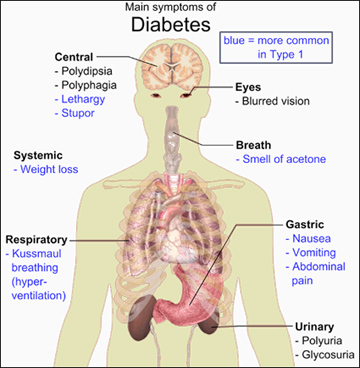
Diabetes is a chronic, metabolic disorder where your body is no longer able to maintain normal glucose (or sugar) levels in your blood.
Normally, sugars from your food are absorbed from your stomach and intestines into the bloodstream. From there, glucose is transported into your cells where it is used as energy to run all of its functions. But when your body cannot get the glucose into your cells, the sugars stay in your blood stream and your cells cannot get the energy they need to function properly.
If you have chronically high blood sugar levels (hyperglycemia) for long periods of time, you will be diagnosed with diabetes.
There are two kinds of diabetes: Type 1 Diabetes or “insulin dependent” diabetes is usually diagnosed in children. This is when the body can no longer produce insulin on its own. Insulin is the biochemical that helps move the sugar from your bloodstream into your cells where it can be used for energy.
Type 2 Diabetes or “adult-onset” diabetes is the most common form of diabetes. Type 2 diabetics are still able to make insulin, but they have become “insulin resistant”. This means that your body does not respond correctly to insulin any longer.
If you are constantly eating high sugar foods (sweets such as candies, cookies, ice cream, etc., but also refined carbohydrates such as white flour and pastas), then your pancreas has to constantly produce more and more insulin.
Over time, your pancreas becomes chronically fatigued and it can no longer produce insulin as well as it used to.
In addition, when your cells are constantly bombarded with all of this sugar in your diet, your cells stop taking in as much. The cells don’t respond to insulin’s signal to move glucose into the cell.
This “insulin resistance” keeps the glucose abnormally high in the blood stream, which can have devastating effects on your body.
The long-term health problems caused by diabetes are: high blood pressure, poor wound healing, vision problems and chronic pain.
Diabetics are also at increased risk for obesity, heart attacks, stroke, cancer, kidney failure and neuropathies.
Diabetes – Blood Sugar Handling
Nearly 26 million people have diabetes with almost 2 million new cases diagnosed each year in the US.
In addition, the CDC estimates that there are 79 million more people out there who are “pre-diabetic”. Which means if these people don’t make positive changes in their health, they too will soon suffer from the disease. (1)
A study in the New England Journal of Medicine stated, “If obesity and DB are not contained, US life expectancy will decrease 5 years in the next decade.”(2)
Diabetes is also emerging as an epidemic problem worldwide, affecting 346 million people. The World Health Organization predicts that the number of deaths from diabetes is expected double in the next 10 years. (3)
While these numbers may be alarming, fortunately there are safe, natural proven methods to prevent you from contracting this disease.
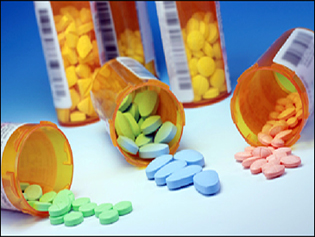
And if you already have been diagnosed with type 2 diabetes, these same methods will allow you cope better with the disease and even reduce your dependence on injections or pills.
What is Diabetes? Diabetes is a chronic, lifelong disease where there are high levels of sugar (in the form of glucose) in the blood.
Your body needs glucose to use it as energy to run all of the functions of your body. But the sugar needs to get into your cells, where it can be used for energy, not stay in your bloodstream. When your body is no longer able to control and regulate the amount of sugar in your bloodstream, your cells cannot get the glucose they need to function properly. There are two kinds of diabetes:
Type 1 diabetes is usually diagnosed in children and is when the body can no longer produce insulin on its own. Insulin is secreted by your body to help move sugar from your bloodstream (which came from your food) into your cells.
Type 2 diabetes is the most common form of diabetes and is known as “adult-onset” diabetes. Instead of the pancreas not being able to make insulin, type 2 diabetics have become “insulin resistant”. This means that your cells no longer respond correctly to insulin.
When you eat a meal, after your body has broken it down, the sugars from the food are absorbed into your bloodstream. Your pancreas then secretes insulin to clear the sugar from blood and get it into your cells where it can be used for energy.
But if you’re constantly eating high sugar foods (not only candies, cookies, ice cream, etc., but also white flour and other refined carbohydrates), then your pancreas has to constantly crank out more and more insulin. Over time, it becomes chronically fatigued and it can’t produce insulin as well as it used to.
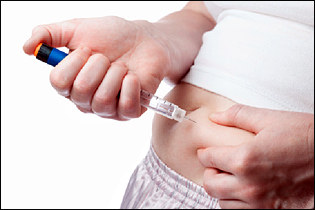
More importantly, after being relentlessly bombarded by all of this sugar, your cells stop taking in as much. This is what is called “insulin resistance” which means your cells are “sugar resistant” as well so the glucose stays in your blood. Then have to take insulin by injection to regulate your blood sugar properly. If you have chronically high blood sugar levels (hyperglycemia) for a long period of time – week after week, month after month, year after year – that can have devastating effects on your body.
Once the cancer has reached this point, where there are many different tumors spread throughout your body, it cannot keep up in fighting it off. Your organ systems start shutting down and eventually your body surrenders to the cancer.
Why Is High Blood Sugar So Dangerous For Your Health?
Researchers have simulated the effects of uncontrolled diabetes by inducing “acute hyperglycemia” in test subjects. They were fed large amounts of sugar and this is what they found. High blood sugar levels cause:
Increases blood pressure
Increases heart rate
Increases levels of catecholamines that cause artery constriction – which means high blood sugar decreases the arteries’ ability to relax and decreases optimal blood flow throughout the body. (4,5)
Increases blood clotting – by increasing the amount of thrombin in the blood, an enzyme that promotes clotting (6)
Increases free radical damage (7,8,9)
Decreases the immune response – sugar affects the white blood cells’ ability to engulf bacteria and fight infection (10)
All of these effects were observed within minutes and hours of one large dose of sugar given to test subjects. Imagine the affect of years and years of eating a high sugar diet!
Long-Term Health Consequences of Having Diabetes
If you are diabetic, you become prone to a whole host of major health problems:
Fatal heart attacks and strokes (5 times more common in diabetics than non-diabetics!) due to increased blood clotting.
Chronic infections and poor wound healing due to impaired immune function (diabetes is the leading cause of non-traumatic amputations).
Increased risk of cancer due to accelerated free radical activity and poor immune function.
Obesity, high blood pressure, kidney failure, neuropathy, eyesight problems (including blindness), acne, erectile dysfunction, pain and/or numbness in the hands and feet are also common consequences of having diabetes.
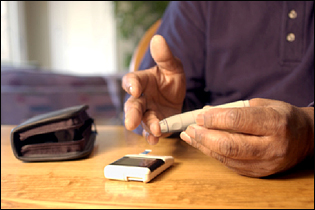
There is also the emotional toll diabetes takes on you as well. Diabetics need to monitor their blood sugar levels very closely throughout the day.
This means you may need to pin prick your finger every few hours to test your blood sugar levels when you wake up, before and after each meal, at bedtime. You will have to test more often when you are exercising, if you’re sick or under stress.
You have to inject yourself with needles, keep your medication with you at all times and take careful records to manage your diabetes.On any given day, if you inject yourself with too much or too little insulin because you don’t monitor yourself properly, you can experience headaches, shakiness, dizziness, balance problems, irritability, confusion and even fainting and seizures.
And long-term, studies show that if you are diagnosed with diabetes at 40 years old, your life span will be cut short 12 years if you’re a man and 14 years if you’re a woman. (11)
Pre-diabetic levels are dangerous for your health too. Research shows that chronic borderline high blood sugar levels greatly increases your risk of not only cardiovascular mortality (heart attacks and strokes) but “all-cause” mortality as well. This means your overall life span is cut short too.
How Do You Put Yourself At Risk For Diabetes?
A Norwegian Study followed 1,973 men over 22 years and those with fasting blood sugar concentrations between 80-89mg/dL proved to have the lowest mortality risk. (12)
Anyone with a fasting blood glucose measurement between 100-125 mg/dL is considered to be “pre-diabetic” and anyone above 126 mg/dLis diagnosed as diabetic.
There are many factors cause blood sugar handling problems, making it more challenging for your body to maintain healthy blood sugar concentrations:
Food choices – i.e. excess carbohydrate intake
Sedentary lifestyle habits
Poor sleep
Obesity
Stress
By far, the most important factor contributing to diabetes is diet. The average American eats 149 pounds of refined sugar every year! Then consider all of the bleached processed flour consumed in typical American foods: cookies, cakes, bread, bagels, pretzels, chips, pizza, etc. Add to that the lack of exercise that would burn off all of those extra calories, contributing to a dangerous obesity problem…
Plus, our chronic sleep deprivation further depletes our body’s energy and it’s ability to function properly…
Not to mention the overwhelming amounts of unrelenting stress that we are subjected to on a daily basis…
Then it’s no wonder that diabetes has become an epidemic problem in this country.
How To Control Type 2 Diabetes
Because diabetes is a multi-factorial disease, managing healthy blood sugar levels requires a multi-faceted approach. No one thing can do it on its own. You must concentrate efforts on the following areas:
Food Choices
The first step in managing healthy blood sugar levels is to focus on your diet.
If you are diabetic or pre-diabetic (or if you are healthy and want to keep that way), you must limit the amount of refined sugar and processed carbohydrates that you eat.
Instead of excess carbs, increase the amount of protein that you consume. This will help stabilize your blood sugar levels from meal to meal, which will decrease hunger pang sensations.
Eating more protein makes your body use more fat as fuel, which is a more stable energy source than the quick-fix that comes from a high carbohydrate meal. Protein is also more satiating than carbohydrates so you’ll feel fuller faster and feel more satisfied by your meal so you will eat less. (13-17)
Decreased total caloric intake is associated with not only better blood sugar control, but also with weight loss, decreased blood pressure, decreased inflammation in the blood, decreased risk of cancer and an overall increase in longevity.
Exercise
Your body is designed to move so becoming more active and exercising your body is crucial to your overall health.
Research shows that even as little as 30 minutes of moderate exercise 5 days/week cuts the risk of pre-diabetics progressing into full-blown diabetes by more than 50%. (18)
Exercise helps you control your blood sugar levels and prevent diabetes by burning off excess calories. Maintaining healthy weight has many positive effects for your health and well being, one of which is lowering your risk for developing diabetes.
Supplements
There are a number of safe, natural supplements that you can add to your daily healthy meals that will help you prevent diabetes as well. If you already have diabetes, these supplements have also shown promise in helping your body manage the affects of high blood sugar levels on your overall health. 1) Alpha Lipoic Acid (ALA) = 600-800mg/day
Alpha Lipoic Acid is a fatty acid naturally found in your body that is both a powerful antioxidant and helps convert glucose into energy.
Recent studies have shown that taking Alpha Lipoic Acid helps increase insulin sensitivity and transport of glucose from the bloodstream into cells. Taking 600-800mg may improve your body’s blood sugar control, combat free radical damage and even help with diabetic neuropathy. (19-20)
2) Cinnamon = 1 gram/day
Taking as little as 1 gram of cinnamon (of the Cassia variety) has been shown to help lower blood glucose levels as well as lower total cholesterol, LDLs and triglycerides. (21)
Cinnamon mimics insulin closely and helps with blood sugar handling by increasing the cell’s insulin sensitivity, so that the sugar gets into the cell instead of staying in the bloodstream. (22-24)
3) Omega-3 Fish Oils = 1-2 grams/day Omega-3’s help to improve insulin metabolism and are powerful anti-oxidants. These healthy fish oils are crucial for balancing your Omega 3:6 ratio which is offers better free radical protection and decreases inflammation in the body.
References
1- www.diabetes.org
2- NEJM March 17, 2005; 352(11): 1138-1145
3- www.who.int
4- American Journal of Physiology June 1995; 268 (6 Pt 1): E1167-1173
5- Circulation 1998; 97: 1675-1701
6- Diabetes 1995; 44: 924-928
7- Diabetes Care 1998; 21: 1529-1533
8- Euro Journal of Clin Invest 1998; 28: 329-333
9- Journal of Clin Endo & Metab 2000; 85: 2970-2973
10- American Journal of Clinical Nutrition 1973; 26: 1180-1184
11- JAMA Oct 8, 2003; 290(14): 1884-1890
12- Diabetes Care 2003; 26: 688-696
13- Journal of Clin Endo & Metab 2003; 88 (4): 1617-1623
14- NEJM May 22, 2003; 348: 2082-2090
15- NEJM May 22, 2003; 348: 2074-2081
16- Lancet Oct 29, 1960; 2: 939-941
17- Annals of Internal Medicine 2004; 140: 769-777
18- Diabetes CareJune 2006; 29 (6): 1433-1438
19- Hormones 2006, 5(4): 251-258
20- Nutrition Oct 2001; 17(10): 888-95
21- Diabetes Care 2003 Dec; 26(12): 3215-8
22- J Agric Food Chem 2000 Mar;48(3): 849-52
23- J Am Coll Nutr 2001 Aug;20(4): 327-36
24- Diabetes Res Clin Pract 2003; 62: 139-48
NATURAL ORGANIC REMEDIES FOR DIABETES
This website is for informational and entertainment purposes only and is not a substitute for medical advice, diagnosis or treatment. Disclaimer.
all content property www.natural-organic-remedies.com - website optimization canada - Canadian iManagement